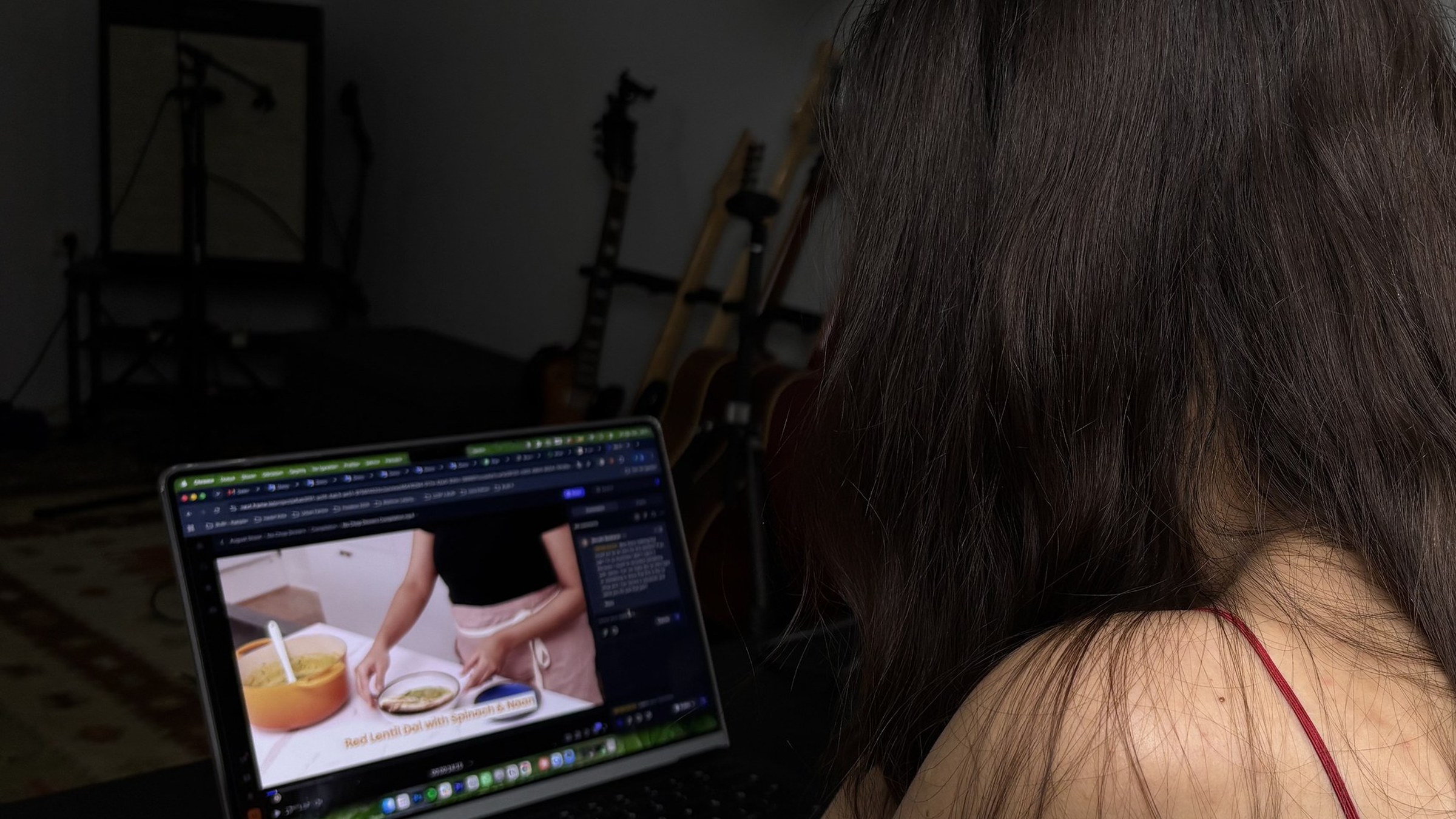
Shorts and Reels
Short cuts built out of the vertical master, under a length law that changes from one brand to the next.
The short version
Is this for you? For shorts cropped from the wide and reels that run past their welcome. Not if you are not publishing short-form at all; this is cut from a vertical master, and with nothing going to the feed there is nothing here to make.
What leaves your plate. The short cut from the vertical sequence rather than the horizontal one, every breath a feed will not forgive taken out, and a length law set for your brand instead of a platform default.
What starts working. Short cuts that belong to your brand rather than to the studio that made them, drawn from a master that was framed for the phone in the first place.
The smallest way in. A free audit: three fields, and a written reading back, usually within about three working days. It commits you to nothing.
What to read next. The five levels to see where this fits, or the casework to see it done.
Why no two partners get the same short-form rules
The short is cut from the vertical sequence
Selection happens against footage already framed for a phone. The highest-tempo moments come out of the vertical master and the connective shots go in between them. Building that master, clip by clip in its own 9:16 sequence, is the vertical video editing work; this page begins where that ends, with the short cut and the length law it runs under. Work from the horizontal timeline instead and every choice you make is provisional, because you are judging pace and legibility on a picture nobody will ever see in that shape.
Nearly every breath goes
Precisely the opposite of the long-form rule, and deliberately so. On a lesson video the pauses stay, because pauses are how a person thinks. On a short cut nearly all of them come out, along with the long rests and the filler, keeping only a beat a line genuinely needs. One speaker, one take, two treatments, because the two audiences arrived in completely different states of patience.
Length is set per brand, and the numbers are nowhere near each other
One partner's cuts run to a twenty-second ceiling. Another averages half a minute. A third averages a full minute. Each of those came from what that audience actually watches, never from a preference of ours, and the distance between them is the entire reason there is no house preference to apply. Each cut is then exported to the current duration, ratio, safe-zone and caption rules of the destination it is going to, which move often enough to be checked rather than remembered.
Show every ingredient, or two of the four
On one recipe channel, four spices going into a pan are represented by two of them and the sequence moves on, because that audience is there for the rhythm. On the other, every ingredient appears, because that audience is deciding whether to cook the thing and a missing item reads as a missing step. Both rules are right. Neither would survive being applied to the other channel.
What goes into a short cut
The ending is built to meet the beginning
Loop-friendly is not a garnish. The last frame is chosen so the first frame following it reads as continuous, which buys a second viewing from somebody who has not yet decided to leave and does not quite notice they have started again.
Sound is a different law on every channel
One partner's short cuts carry no music whatsoever: her voice and the sounds of the kitchen, kept from the original take or added as effects where the recording missed them. Another has no music on its short cuts either. A third bans stock music across everything it publishes. The music page carries the whole of this, because it is longer than it looks.
Speeding a clip up is banned at one partner and required at the next
Pouring and stirring take a clean, quick jump cut on both recipe channels. Chopping is where they separate: one speeds the clips up to get through it, and the other forbids speed changes outright as a way of shortening a scene, so the seconds have to be found in the cut instead. Identical craft, identical food, opposite instruction. That is why pacing sits in each partner's own standards and never in ours.
Twenty seconds at one partner, thirty at another, sixty at a third. A single house rule would have been wrong twice.
The length belongs to the brand, not to the studio that happened to cut it.
What changes for you
Short cuts that belong to the brand rather than to the studio that made them, built from a master that was framed for the phone in the first place.
Related: Vertical video editing · Hooks and the first seconds · Music and licensing · Long-form editing
Send the channel and we will read the edits themselves: pacing, cuts, consistency across recent videos. The audit names what post-production would change first, in writing, before anything is committed.
Request your free audit.
Three fields, and a written reading back: a fit snapshot, two or three prioritised opportunities, and a recommended next step.
A person reads the channel and writes the audit by hand: a considered read typically takes three working days. That is the usual shape, not a promised turnaround. We use these details only to reply to you: no lists, no lurking.
What you will get
A fit snapshot: where your channel stands, and whether we are a match.
Two to three opportunities: specific, prioritised, yours to keep.
A recommended next step, even if that step is not us.
The audit is free and commits you to nothing: nobody follows up with a call you did not ask for.
The casework shows all of this done.
The case studies are the same work with the numbers, the sources and the dates attached.
See the casework →